Welcome
Today we will read one of the most famous poems in the English language.
It is called The Road Not Taken & it got written by Robert Frost in 1916.
Almost everyone has heard the last line: I took the one less traveled by, and that has made all the difference: but the poem is trickier than it sounds.
By the end of this lesson, you will understand what Frost was really saying, & it might surprise you.
About Robert Frost
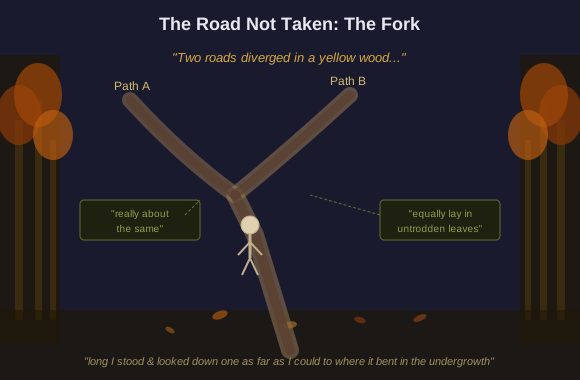
Who was Robert Frost?
Robert Frost (1874–1963) was an American poet known for writing about rural New England: farms, woods, stone walls, and country roads.
His language sounds simple & conversational, but his poems almost always have a hidden layer of meaning underneath.
Frost once said: A poem begins as a lump in the throat, a sense of wrong, a homesickness, a lovesickness.
He won the Pulitzer Prize for poetry four times: more than any other poet.
The Road Not Taken
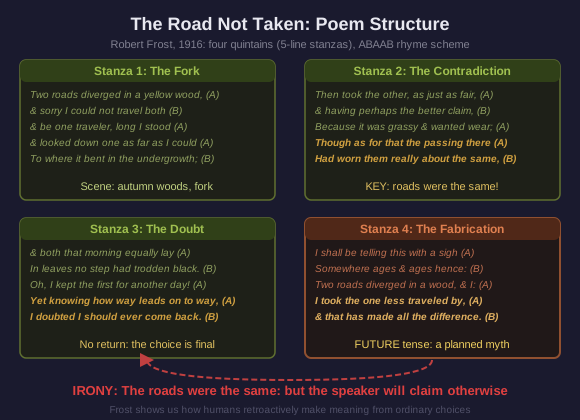
The Road Not Taken
Robert Frost, 1916
Two roads diverged in a yellow wood,
And sorry I could not travel both
And be one traveler, long I stood
And looked down one as far as I could
To where it bent in the undergrowth;
Then took the other, as just as fair,
And having perhaps the better claim,
Because it was grassy & wanted wear;
Though as for that the passing there
Had worn them really about the same,
And both that morning equally lay
In leaves no step had trodden black.
Oh, I kept the first for another day!
Yet knowing how way leads on to way,
I doubted whether I should ever come back.
I shall be telling this with a sigh
Somewhere ages & ages hence:
Two roads diverged in a wood, & I:
I took the one less traveled by,
And that has made all the difference.
Key Words
Before we dig in, let's make sure we understand a few important words.
diverged: split apart, went in different directions
undergrowth: low bushes and plants growing beneath trees
wanted wear: needed to be walked on more (was less worn)
trodden: stepped on, walked over
hence: from now (in the future)
Stanza One: The Fork
Stanza One
Two roads diverged in a yellow wood, / And sorry I could not travel both / And be one traveler, long I stood / And looked down one as far as I could / To where it bent in the undergrowth;
This is where the poem begins: a single moment of decision.
Stanza Two: The Choice
Stanza Two
Then took the other, as just as fair, / And having perhaps the better claim, / Because it was grassy & wanted wear; / Though as for that the passing there / Had worn them really about the same,
Pay very close attention to what Frost says about the two roads here.
Stanza Three: The Doubt
Stanza Three
And both that morning equally lay / In leaves no step had trodden black. / Oh, I kept the first for another day! / Yet knowing how way leads on to way, / I doubted whether I should ever come back.
This stanza confirms something important & then reveals a moment of self-knowledge.
Stanza Four: The Story We Tell
Stanza Four
I shall be telling this with a sigh / Somewhere ages & ages hence: / Two roads diverged in a wood, & I: / I took the one less traveled by, / And that has made all the difference.
This is the most famous stanza: and the most misunderstood.
Pay attention to the verb tense. The speaker says I shall be telling: that is future tense.
The Irony
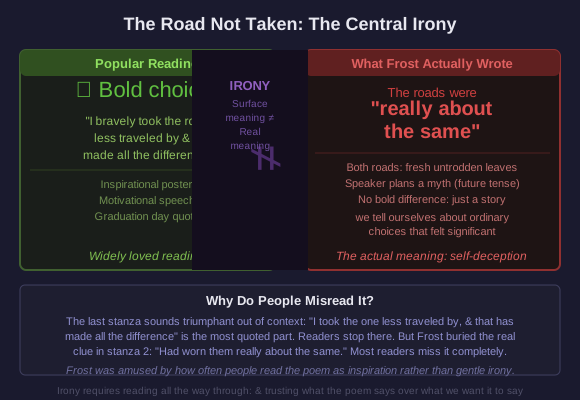
The Central Irony
Most people read this poem as a celebration of individualism: take the road less traveled and it will make all the difference!
But you have now seen the evidence that tells a different story:
1. The roads were 'really about the same' (stanza 2)
2. Both were 'equally' covered in fresh leaves (stanza 3)
3. The speaker plans to claim they chose the less-traveled road: in the future (stanza 4)
The poem is not about making a bold choice. It is about how we invent stories to make our ordinary choices feel meaningful.
The Sigh
What About the Sigh?
One of the most debated words in the poem is sigh.
I shall be telling this with a sigh
A sigh can mean many things: nostalgia, regret, satisfaction, weariness, or even performance.
Poetic Structure
Form & Structure
Frost chose his form carefully:
- Four stanzas, five lines each (a quintain)
- Rhyme scheme: ABAAB: the middle line reaches forward to the next stanza, pulling you onward
- Meter: loosely iambic tetrameter: four beats per line, like a heartbeat or footsteps
The rhythm sounds like walking. The rhyme scheme keeps you moving forward. The form mirrors the content: a journey with no turning back.
Your Road
Your Turn
Frost's poem is about how we make meaning from our choices: even when the options were nearly identical.
We tell ourselves stories about why we chose what we chose. And those stories shape who we become.
What Will You Remember?
One Last Thought
Robert Frost hid a truth inside one of the most quoted poems of all time.
Most people never see it. You did.